

UCL and Oxford researchers test new chemistry for water-based batteries
The researchers demonstrated a way to make more of iodine’s storage capacity available. Testing at grid scale remains a separate step.
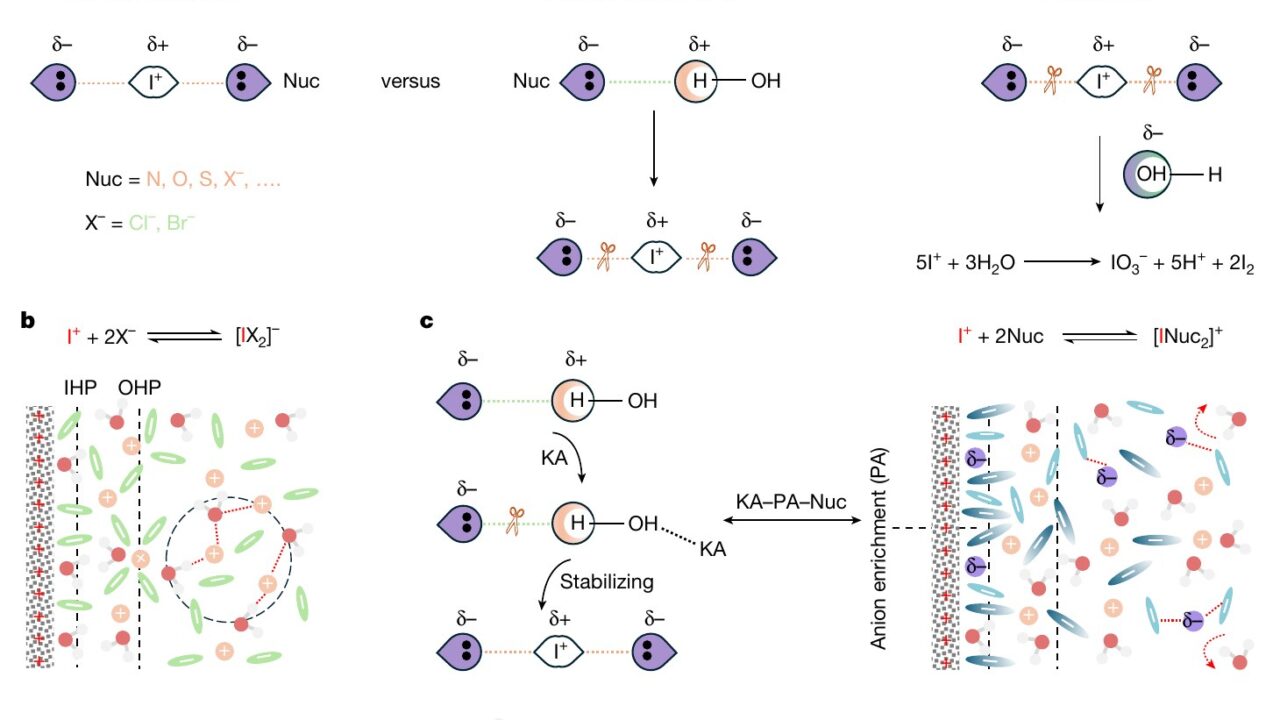
Researchers from University College London and the University of Oxford have tested a new liquid electrolyte for water-based iodine batteries. Their study, published in Nature on 11 November, shows how to make a reaction that transfers four electrons reversible in the lab. UCL reported the findings on 13 November.
The change matters because iodine has more theoretical storage capacity when the reaction transfers four electrons instead of two. Earlier approaches achieved the four-electron reaction with concentrated electrolytes containing halogen salts. The authors say those mixtures can be corrosive. Their approach uses a different electrolyte to stabilise a reactive form of iodine as the battery charges and discharges.
The paper reports that zinc–iodine cells retained 94% of their capacity after 2,000 cycles in one laboratory test. The researchers also tested the chemistry in pouch cells and in water-based aluminium–iodine cells. The 94% figure describes how much capacity one set of cells retained under a particular test condition. It cannot be used to estimate how long a grid battery would last.
Storage can help Britain make use of renewable electricity at times when generation and demand do not line up. A chemistry that works in small cells still needs to show how it performs at larger scales. UCL says the next steps include larger-scale testing and improving performance under more realistic operating conditions.
More from BroadKit · The UK’s electrification roadmap